

Books That Feel Like Home
on "Anne of Green Gables"

I sometimes think that I was meant to be a professional reader. No, I don’t mean a professor, although the idea of toiling over some obscure bit of literary analysis few people will ever read has its undeniable charm. I don’t mean a literary critic, either, though my fingers just itch to eviscerate one bad book after another with blow after blow of sharp remark, stroke after stroke of my fountain pen’s steel, until the victim lies in rags and tatters, bleeding ink. I don’t mean someone who works at a publishing house, panning for gold and seldom finding it, or having to alchemize it to mere gilt for the sake of the profit motive. No, I mean nothing so useful, so productive, so fruitful as that. I mean someone who does nothing but read all day, read and read and read and read, drifting out to the Isle of Dreams over the Sea of Imagination on my barque of pages. Perhaps my little flat would spring a leak while I am playing Elaine, the lily maid of Astolat, on my way to Camelot, but that is no matter.
Of course, as it rightly should be, in this world all rewards flow to those who create, not those who consume. It is true that I love writing, that I describe myself as a writer, that being someone who puts pen to paper (or finger to keyboard) in elusive search for Truth and Beauty is an unalterable fact of my existence. But when the crowds disperse and all the busy doings of the world die away and darkness settles over evening and I am alone with myself once more, I must admit that I love writing less than I love reading. I prefer playing the violin to listening to music, and I can even say that I derive more enjoyment from baking than from eating baked goods, but I cannot truthfully say that, given a choice between only being able to read for the rest of my life and only being able to write, I would chose writing.
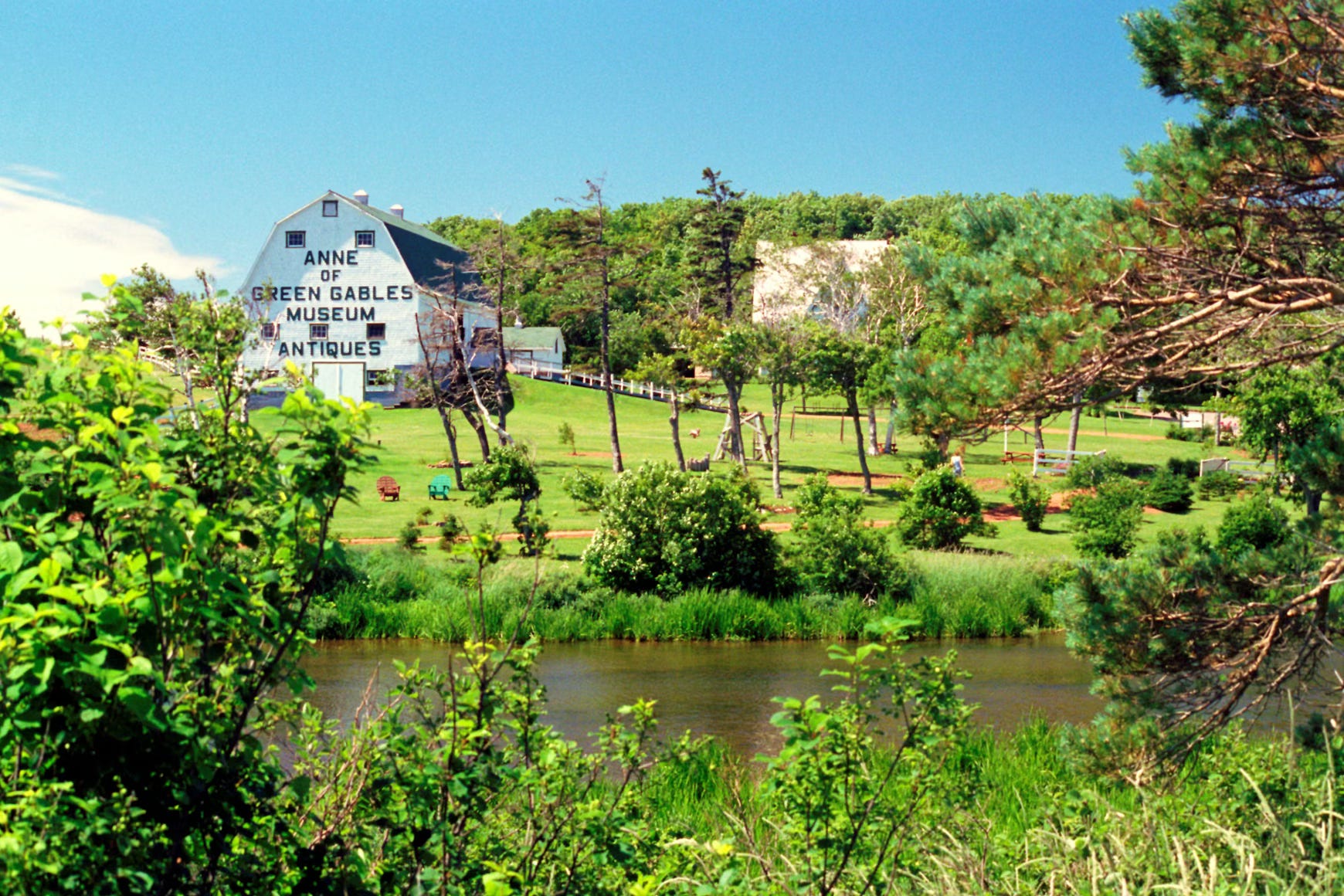
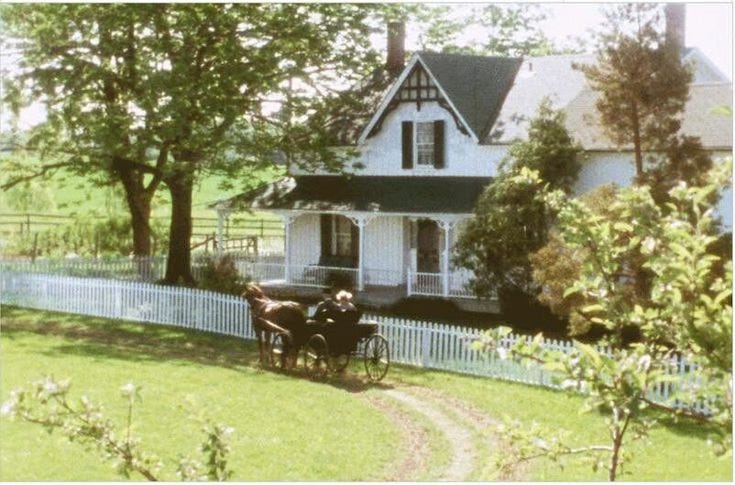
All this came home to me about a week ago, when I began rereading L. M. Montgomery’s “Anne” books. There are eight in all; the first, Anne of Green Gables, published in 1908, is Montgomery’s first and most famous novel. The copy I received at the age of six or seven came with a little gold chain and heart-shaped locket; I still remember its cover: against a red background and a house that can be none other than Green Gables stands a straw-hatted, gingham-and-wincey-garbed, redheaded, freckle-faced young girl, carrying, with both hands, the carpetbag that contains all her “worldly goods.” The back cover describes this girl, Anne Shirley, as only “one of the most delightful, irrepressible young heroines of all time.”
After reading many novels and acquainting myself with many heroines since first reading Anne of Green Gables, I am inclined to agree. Mark Twain called Anne “the dearest and most lovable child in fiction since the immortal Alice.” I love Alice, but she seems to me a flatter heroine than Anne. In the Anne books, what we get is basically the arc of a whole life. The first book introduces us to 11-year-old orphan Anne waiting at the Bright River train station; a fortunate mix-up has sent her—not the boy wanted for farm work—to middle-aged brother and sister Matthew and Marilla Cuthbert of Green Gables. Shy, retiring Matthew, always at a loss around the female of the species, nevertheless takes an immediate liking to Anne, with her big words and her wide eyes, her fancy about sleeping in a wild cherry tree and her curiosity about P.E.I.’s red roads, her raptures over the beauties of nature and her own frank nature. Anne and Matthew are “kindred spirits,” and Matthew’s attachment to Anne, along with Marilla’s intuition of what a lonely, impoverished, love-starved life Anne must have led, prevail upon Marilla to let Anne stay at Green Gables. Alas, Anne’s impulsivity, her open expression of emotion, her habit of daydreaming, and sometimes just sheer bad luck contrive to get her into scrape after hilarious scrape: accidentally inebriating her best friend Diana Barry with “raspberry cordial,” accidentally dying her hair green, not-so-accidentally breaking a slate over the head of her handsome classmate Gilbert Blythe when he calls her “Carrots” (her red hair is a sore spot).
As she ages from 11 to 16, she sheds her “heathen ways,” her talkativeness, her propensity for big words. She becomes more responsible without losing all her romance (“Don’t give up all your romance… keep a little of it, Anne, keep a little of it,” Matthew says to her), she sees what ambition can do when coupled with hard work (and a bit of academic rivalry with Gilbert), she learns the cost of holding a grudge, she is visited by “the reaper whose name is death” and finds that real tragedy is seldom like the “tragical” stories she and her friends make up in their Story Club. At the end of the novel, with Matthew gone and Marilla’s eyesight going, Anne must put off college to stay behind at Green Gables.
The sequel, Anne of Avonlea, covers Anne’s life from ages 16 to 18; as she teaches at the local school and founds, with Gilbert, the Avolea Village Improvement Society (A.V.I.S.), we see her step into more responsibility and leadership in her community. Now “brought up,” she assists in the bringing up of the twins Marilla adopts from a distant relative and guides several of her pupils. Still, not entirely grown-up, she cannot help get into the occasional, comical scrape. By the end of this phase of Anne’s life, “the page of girlhood had been turned, as by an unseen finger, and the page of womanhood was before [Anne] with all its charm and mystery, its pain and gladness.” The third book covers Anne’s college years, the fourth the post-college, pre-marriage period, the fifth the first year or so of marriage, and the last three give us Anne’s middle age as wife and mother, turning from Anne to focus on her children as they themselves grow up and face the specter of WWI.
Other authors may give you a lovable heroine, but in most cases you are only with them for a small slice of their lives: childhood is not lingered over; marriage is a stopping point. Anne, however, is a character who offers you different things at different stages of life, and somehow I always find that I tend to come to an Anne book—or an Anne book comes to me—just when I am in the same stage of life as Anne herself. This past June, newly married, I happened to find in a Little Free Library by the side of a road Anne’s House of Dreams, covering Anne’s early married days—it was, as Mrs. Spencer says, “positively providential.” Where are the books now that offer so much whimsy and so much wisdom, that are always a delight, that always have something new to show you and teach you? This most recent rereading, I was struck by the amount of responsibility many of the characters have at a young age: they had jobs earlier, married earlier, had children earlier, faced the sorrows of death earlier, and therefore emerge better equipped to handle the ups and downs of life.
When I reread the Anne books a few years ago, I was niggled by Anne’s seeming perfection. Actually, I realized this time, she is not so perfect after all—she always has something she can learn and grow from, no matter how old she is. Anne of Avonlea introduces us to Anne the matchmaker, Anne as catalyst for a couple’s happy getting together, and yet ironically it takes her several years and Gilbert’s near-death experience to realize what true love looks like in real life. Ever inclined to see the best in others, and especially in children, she eventually finds that not everyone is worth winning over, not every child corrigible.
As the books progress, familiar characters come and go, and we get introduced to several new ones. Some stay with us for many books, becoming Anne’s lifelong friends; others are there for just an evening or a season, a comical incident or a poignant moment. One or two, we feel, may be grating (the child Paul Irving) or receive unfair treatment from the author (Dora Keith), but even those with minor roles to play come out at us like flesh-and-blood people, friends we are glad to revisit. Anne has a gift of winning over grumps, and she makes us see that most people are not bad or hostile: under a prickly surface may lie a heart as starved for love as her own once was.
Readers may be disappointed that Anne, in spite of her B.A. (she is the first woman in Avonlea to obtain a degree), her way with words, her love of literature, her boundless “scope for imagination,” and her early attempts to publish stories, does not become a professional writer, instead choosing to devote her life to the domestic sphere. But Anne’s talent has always been for people—for understanding them, for bringing out the best in them, for cultivating love and spreading kindness and fostering community: “I’d like to add some beauty to life… I don’t exactly want to make people know more… but I’d love to make them have a pleasanter time because of me… to have some little joy or happy thought that would never have existed if I hadn’t been born.”
In the wake of modernism, Anne was dismissed for being too sentimental, too overwrought, too easy. When you study literature academically, you find it hard to shake the notion of difficulty as a virtue in and of itself. My first copy of Anne of Green Gables testifies to what a small child considers difficult: I had underlined all of the “big” words in pencil so that I could look them up. Now nearly two decades later, I can zip through the novel in a few quiet hours, and yet that does not mean I am not collecting jewels along the way. On each reread, like Anne, “I have a conviction that there are scores of beautiful nooks there that have never really been seen although they may have been looked at.”
Bloom does not include Montgomery in his Western canon or his “mosaic of geniuses.” Yet biographer Mary Henley Rubio is right to point out that “[Montgomery’s books’] sales were not inflated by being required novels on courses.” Few books can make me laugh and cry as the Anne books do, and few books have ingrained themselves that deeply into my soul. Having first read Anne at a young, impressionable age, before personality was solidified and memory shored up, I often wonder about my drive to do well academically, my love of whimsy, my belief in the importance of pretty dresses, my imagination, my willingness to see all people as fundamentally good, my optimism, my romanticism, my idealism—do they merely coincide with Anne’s, or did Anne plant them there? Where does Anne end, and where do I begin?
Jane Austen once advised her teenaged niece that “three or four families in a country village is the very thing to work on,” and I feel that Montgomery would agree; somehow, though I’ll admit that Austen is the better novelist, I find the “country village” of Avonlea a warmer and more familiar place than any in Austen’s work. Montgomery has Austen’s flair for sharp social satire, but Austen’s witticisms can flash out with an edge of shrewish meanness that Montgomery’s never stoop to. Unlike Austen, who seems to think romantic love impossible for women after the ripe old age of 27, Montgomery has several women who marry past 40, and it is beautiful to see that age is no barrier to love.
No novelist is better than Montgomery at charting the comings and goings of each season, being alive to the particular beauties that belong to each month and time of year. In the wake of so many lesser Hemingways peddling their barren minimalism, it is nice to read something full and ripe and lush. The sweetness of purplish—or shall we say lavender—prose, however, is cut by acidic irony; comic scenes are given depth by being mingled with sorrow and loss. The Anne books are as rich with literary allusions as any modernist text, drawing on Browning and Tennyson and Shakespeare. Rereading them, though, I am content to simply read, not underline and annotate and analyze, to remain the “common reader,” one of the masses, a member of the still vast hordes of the reading public.
As a child, as a teenager, and even as an adult, I was persecuted by certain unimaginative people for “reading storybooks.” I cannot defend “storybooks” on the solid grounds of usefulness or practicality. It is true, when I take off my critic’s glasses and lay down my writer’s pen: I do read for pleasure, pure, untrammeled, boundless pleasure. I do read to escape into another, fairy world, leaving behind all the humdrum bore of this one. I do read for fun, I read to get lost, I read to go “Over the mountains of the moon, / Down the valley of the shadow,” and when I am in that opalescent land, nothing can pain me (or if it does, it is a sweet pain), nothing can age me, nothing can tether my floating soul. I am in eternal time and not human time, I am in “Tomorrow,” as little Elizabeth says in Windy Poplars, I am at my soul’s true home.
There are books that feel like sea voyages, and there are books that feel like long, rambling walks; there are books that feel like journeys to far-off lands, and there are books that feel like coming home. I am not yet at the end of my reread, and I will be very sad to say goodbye to Anne and all of the other friends I have met along the way. But—and this is the good thing about fiction that is not true of life—you can turn back to page one and live it all over again.
Dear Readers, I hope you have been having a lovely autumn. The 1985 Anne of Green Gables used to come on PBS on Thanksgiving when I was a child, so I always associate it with the coziness of time of year. What books for you feel like home? Please let me know in the comments!
This is such a lovely tribute to a favorite writer, Ramya. Beautifully crafted! 🌱
As to your desire to be a professional reader, the protagonist of a fine novel by a friend of mine discovers the same wish and finds a way, after much struggle, to make it so. I think you would enjoy her journey to personal and professional fulfillment. Here is my review of the novel in case you’re interested:
https://open.substack.com/pub/bairdbrightman/p/your-heros-journey?utm_campaign=post&utm_medium=web