

America in Review
the barbaric yawp heard round the world

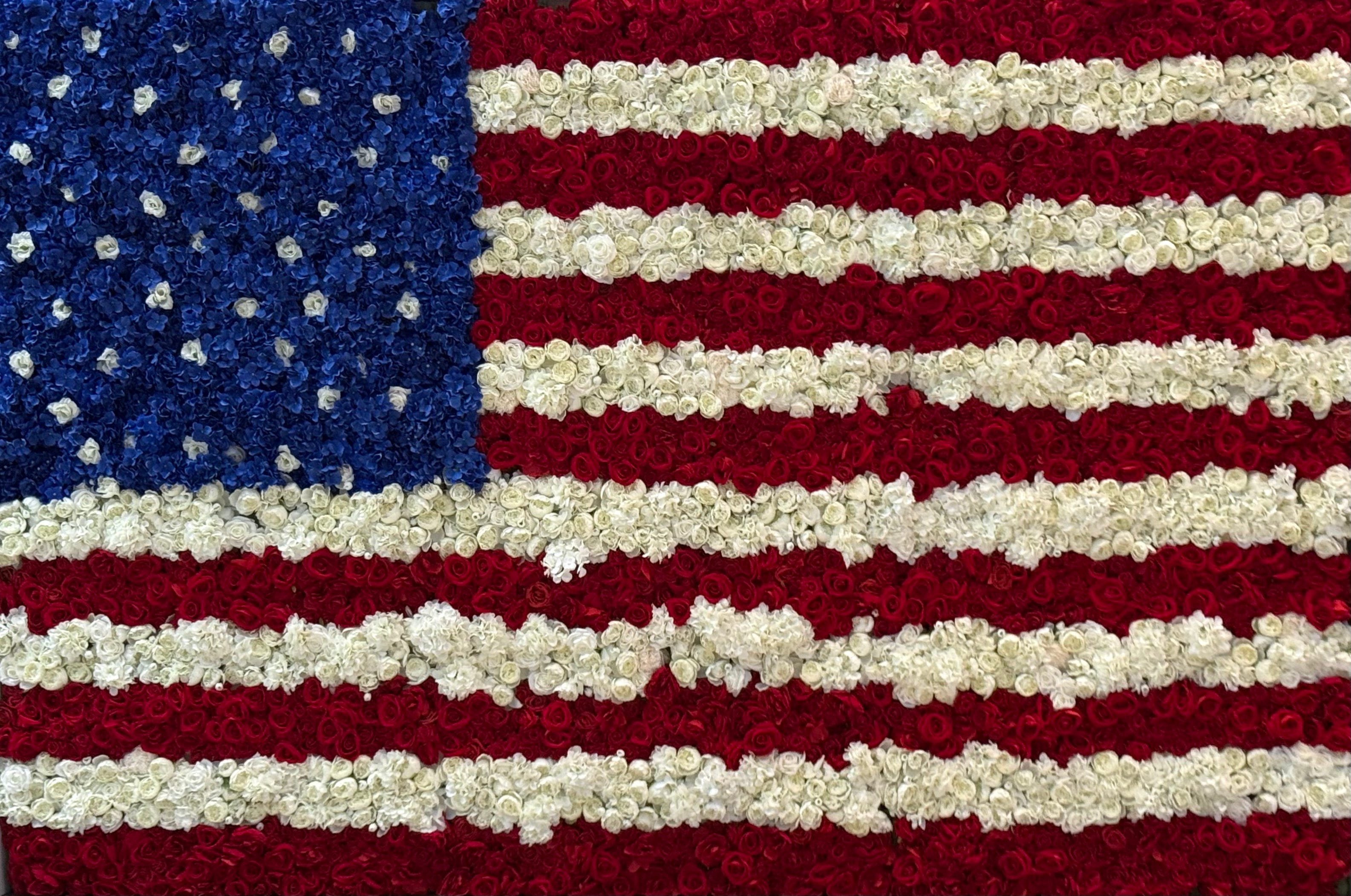
It was over 12,000 years ago that ancestors of Native Americans strolled over the Bering Strait from Siberia into the New World and a thousand years ago that Vikings sailed (because in the intervening millennia that convenient overpass had sadly been swallowed into the sea) from Iceland and touched upon North America, and five hundred years since “Columbus sailed the ocean blue,” and 400 years since the Mayflower anchored in Plymouth and made a rock star out of an otherwise unremarkable boulder, but today I am writing on the 250th birthday of the United States of America, when (mostly) English people declared their independence from other English people, snipping the umbilical cord that through the frigid waters of the Atlantic had kept wayward child tethered to overbearing mother.
In my neck of the American woods, Boston, it is impossible to go anywhere without running into some vestige of the colonial era, without encountering some other important linkage to our nation’s past. They are all crammed in together, relics in a display cabinet. Over there is the site of the Boston Massacre (known in Britain more politely, of course, as the “Incident on King Street”); there is the site of the Boston Tea Party (known in Britain more derisively, of course, as “American Breakfast”—just kidding, I made this up); there America’s first town meeting was held; there Americans first breathed the greenery in a public park; there Benjamin Franklin was born; there Paul Revere was born; there five signatures on the Declaration of Independence had Latin declensions rapp’d into their brains; there John Hancock and Samuel Adams are buried. About half an hour’s drive will take you to Lexington and Concord, where you can retrace the old battles of the Revolution, or to Quincy, the birthplace of John Adams and John Quincy Adams. When I lived in the suburbs and took walks by the Charles River, I used to come across a plaque that marked a spot George Washington and his horse had apparently trod upon—sacred, American grass!
In this state which nobody can spell and in which nobody can drive, literary history also feels omnipresent: in aforementioned Concord are the homes of Ralph Waldo Emerson and Louisa May Alcott and Nathaniel Hawthorne and the famous Walden Pond of Henry David Thoreau. A little further afield, in Western Massachusetts, are homes where immortal works of Emily Dickinson, Herman Melville, and Edith Wharton took their births. Under the weight of all this history, the American writer, the American person, can begin to totter. Our nation is still a young one, no doubt, but if her scope is not deep, it is at least very wide, its vast geography a physical correlative of its other vastnesses.
My earliest and best introduction to American history was the American Girl Dolls. Kaya, relishing in the great outdoors with her Nez Perce tribe; Felicity, riding her horse in colonial Virginia as revolution stirred; Josefina, washing her clothes in a stream with yucca-root in 1820s New Mexico as Americans begin to show up; Kirsten, adjusting to Minnesota as an immigrant from Sweden; Addy, escaping slavery around the end of the Civil War; Samantha, confronting divides between rich and poor in New York at the turn of the century; Kit, struggling through the Great Depression; Molly, weathering World War II; Julie, getting groovy in the ’70s. What these dolls and their stories impressed upon me most of all was the great sweep and scope of America. How vastly different, how words apart were Felicity and Julie, Addy and Kit, Samantha and Molly, Kaya and Kirsten! In most other countries it is easy enough to delineate one national character, trace it back through that nation’s history, say that such-and-such people like X and think like Y and have a general attitude towards Z, but when one thinks about how different America is all over, one feels amazed that it has held together so long, surviving secessions and recessions and depressions, class divisions and race divisions and gender divisions, divisions of East and West and North and South, of educated and uneducated, immigrant and non-immigrant, right-wing and left-wing.
The diversity of the American landscape perhaps predicted the diversity of her people. The four steady seasons, the dropping leaves and the woodsy poetry of the Northeast; the vast prairies and lakes, the pancake flatness of the Midwest; the mountains and swamps and heat of the South; the arid desert of the West; the rainy evergreen old forests of the Northwest—all different, and yet each beautiful, each remarkable, each America. But is there something that holds it all together? Is there something that connects hot desert with wet glade, snowy plain with flowering mountain? Is there anything, anything at all, about Kaya and Josefina and Kirsten and Addy and Samantha and Molly that speaks to some essential “Americanness,” that marks them out as noticeably American? Reading Emerson and Thoreau and Hawthorne and Dickinson and Melville and Wharton and Whitman and Fitzgerald and Poe, is there anything they all say that converges towards some idea of America?
America as we know it today largely hinges on two great pieces of rhetoric: the Declaration of Independence and—echoing it, responding to it, in conversation with it—the Gettysburg Address. The Declaration makes many claims that, across the space of two and a half centuries, still sound fresh today, fresh not only because they are radical, rebellious, and revolutionary, but because they strike the chord of truth. It is a truth that rings with the strings of every human heart. First, there is the claim “that all men are created equal.” I am not better than you, nor you better than me, because one of us has a higher birth or is richer or born under a different star. Of course, people are born with differences, differences of nature and differences of circumstance. But intrinsically, every human being is worth just as much as every other human being; every human spirit is equal to every other human spirit in the eyes of God. This is the equality Jane Eyre speaks of when she says, “it is my spirit that addresses your spirit; just as if both had passed through the grave, and we stood at God’s feet, equal,—as we are!”
From this claim follows the next, that because we are all equal, we are all “endowed by [our] Creator with certain unalienable Rights.” These are rights that we are born with, rights that are inherent properties of our being human, rights that derive their authority from a higher, a mightier source than kings. No one can give us these rights—they are already ours—and no one can take them away. They cannot be separated from us. They line the fiber of our blood. The third claim outlines these rights: “Life, Liberty, and the pursuit of Happiness.” We all have the right to live, we all have the right to live untrammeled and un-oppressed, and we all have the right to in that life pursue “Happiness,” which I have always equated with Aristotle’s eudaimonia, proper human flourishing. The achievement of that happiness is no guarantee, but the right to pursuit it, so long as our ends are not vicious or injurious, is. The last claim answers the question of what a government is for, why we need government at all: it is the purpose of government to “secure these rights.” When a government is instead “destructive of these ends,” the people then have a right to “alter or abolish” that government and set up a new one, conducive to and protective of those rights.
Here, then, is the backbone of America and the seed of the American Dream. If there is anything that knits together American history and people and culture, it is this American Dream, this dream of the fundamental equality of all humans, of life, liberty, and the pursuit of happiness, made possible by a government that would protect those “unalienable” rights. But even back then, even at the time Independence was Declared, America could not live up to its dream. “All men”—but what of women? And what of African-Americans, largely slaves (many of the Declaration’s signatories were slaveowners)? What of Native Americans, whose land was and would be steadily stripped away from them? What of the Irish immigrants, what of Catholics, what of the interred Japanese? Much of American history can be read as a measurement of distance away from its founding ideals.
For a long time I was ambivalent about America. The America that my parents had immigrated to, the America that had made it possible for them to come to this country with a mere couple hundred dollars (why is it that everyone’s parents claim to have come here with a mere measly bit of change?) and work their way up and build respectable careers and raise their family in a safe, beautiful town with a good school district and rebuild their home into one of their liking and send their daughter to music and dance and math classes and to an Ivy League college seemed to be rapidly disappearing beneath my feet. America was no longer solid ground; I was sinking into it as into quicksand. Instead of that America there was the America whose high healthcare costs led people to sex work or drugs or murder, the America whose political divisions were increasingly tearing her apart, the America whose runaway technology was now threatening to take all our jobs and our intellectual capacities and our Puritan belief in hard work.
Our culture, too, has just as equally been disillusioned with the American Dream as it has romanticized it. Gatsby, born poor James Gatz in North Dakota, becomes a New York multimillionaire, and yet his fortune is of dubious origin; and yet for all the material things he can get, he can never get back the love of his life or the past; and yet he bumps up against the fact that there is an aristocracy of birth from which he is forever excluded; and yet he dies ignominiously, abandoned and unmourned. Captain Ahab, “grand, ungody, god-like,” single-minded in his quest for the whale, is a parable of the dangers of Emersonian self-reliance and American ambition. Adam Verver of “American City,” a disgustingly wealthy businessman, bests a penniless European prince (ironically and aptly named Amerigo) for the heart of his Europe-educated wife, taking her and a treasure trove of other European objets d’art back to America, to shut them up in a museum that is more of a mausoleum. In Hawthorne’s stories, Puritans frequently discover sin in the midst of their moral scrupulousness; technologists, scientists, and inventors frequently meet the limits of their ingenuity, the limits of unbridled progress and exploration.
Still, the American experiment has proven not only resilient but ascendant. In the past 250 years and especially in later decades, the scope of “all men” has broadened, and the equality of all people is now more of a reality than it had been in 1776. If America is not perfect, if the American Dream is a chimera, there must be a reason that all kinds of people from all over the world are still clamoring to come here, to work here and to live here.
One can get so caught up in the disillusion that one forgets the amazing power of the dream itself. It is, simply put, the dream of taking one’s destiny in one’s own hands. It is the dream of using your own resources, your own brains and skills and guts and talents, to realize the deepest potential of yourself. It is the dream of obeying no one else’ drumbeat, singing no one else’s song but your own. For all that it has been attacked and eroded, I think the American Dream has a great animating force. Everyday we make choices, and even in the littlest of these choices we ought to choose what is most conducive to life, liberty, and the pursuit of happiness.
Our great images of America and Americans are often loners and eccentrics and freaks. I think of Emily Dickinson, of Travis from Paris, Texas, of our vast highway system and how inured Americans are to driving great distances, at one with the open road. I think for the American Dream to really work for you, you have to be a capitalist—that is to say, your own boss, somebody who takes instead of waiting for someone else to give. We must be cowboys on the vast plains of ourselves, seeking always new frontiers, thinking always thinking for ourselves, obeying always the dictates of our own deep-hidden souls. When we see somebody rise up from difficulty and oppression and poverty and cease being a victim of circumstance, we feel inspired because we know there is something of this power in ourselves too, if only we were brave enough to harness it. It is easy to think of a thousand reasons why you can’t, why it would be hard, why the world and everything is against you, but even in the act of taking that first step, even in that difficulty, there is tremendous joy and tremendous freedom.
On this day, we should declare independence not only from kings and monarchs but from received ideas, from convention, from narrow-mindedness, from self-limitation, from self-hatred as well as egoism, from falsity, from stasis, from obedience, from cowardice, from fear. We must live, and in that life live freely, live fully, live flourishingly. We must not allow our time to drift away from us like icebergs, the better part of it submerged under the level of consciousness. I spent a large part of my first adult years not independent, mostly through my own fault, and now that I am finally independent I see how important that independence really is. Not because living with my parents was unpleasant—in fact, it was full of fun, and my life was generally easy, and I loved them very much—but because when you live under the dictates of others, you are only living a half-life. Only when one thinks independently, dreams independently, lives independently can one really grow, and that is what life is: to grow, to evolve, to change, to flower, to blossom, and then to die, and yet die knowing that you have flowered, have not been blighted in the bud.
My original intention for this piece was to write a “review” of America, but it is a large book, and a complex one. Its meaning does not yield easily, or rather, it has so many meanings, and these meanings often contradict one another. Perhaps it is this contradiction that is the beautiful beating heart of America, the fact that it is large enough to hold my dreams and your dreams and her dreams and his dreams and yet hold together. “Suppose you should contradict yourself; what then?” Emerson asks, and as if in answer, Whitman says, “Do I contradict myself? / Very well then I contradict myself, / (I am large, I contain multitudes.)”
Because this is a review, you probably expect me to state my rating, put a number on it from one to ten, give it a grade, hand out stars like I’m a solar system. Well, I am not going to give America any stars. After all, she already has fifty of them. They should last, I think, until the next sesquintupledecentennial. I should say, though, that there is a time when all criticism dies in love and the voice must cast off analysis and takes up the song of celebration. America’s is the barbaric yawp heard round the world; barbaric though it be, I do love it. I love America, gutsy, vulgar, plucky, brash. I love America quiet, whispering in her plains and valleys. I love the cities of America, and I love the small towns of America. I love the rural emptiness of America, and I love the big sprawl of America, and I even love encountering America outside of America. Most of all, I love its people, the descendants of searchers and seekers and believers and rebels.
Reticent Puritan Boston Brahmins who are not really Brahmin (I am a Bostonian and a Brahmin, therefore I am a Boston Brahmin), I love you! Drawling Texans, I love you! New Yorkers who stand “on line,” I love you! Rhode Islanders who live on a postage stamp, I love you! Oregonians with the sylvan splendor of your evergreens, I love you! Farmers eking out of our good American landscape good American nutriment, I love you! Immigrants dreaming of a better life, I love you! Billionaires with your silly useless hubristic billions, I love you! Capitalists and hustlers, the ambitious, the cunning, the self-made, and all those with steel girders for bones, I love you! Beauty queens and country singers, I love you! Poets who will not put down their pens, I love you! Painters and sculptors and movie-makers and myth-makers, I love you! Religious nuts, I love you! Drivers and cleaners and cooks and construction-workers and all those who invisibly keep our country running, I love you! Politicians, though I am deeply suspicious of you, I also love you! Doctors and nurses, philosophers and dwindling academics, I love you! Hollywood stars, since after all as Frank O’Hara says, “the heavens operate on the star system,” I love you!
I am grateful that my parents made the decision to come to America, a decision that changed my life years before I was born. I am grateful that America declared independence 250 years ago. I am grateful that America has no king to whom Americans have to make ridiculous obeisance. I am grateful that America is a country founded by a dream, illuminated by a dream, united by a dream. A dream, like a spider’s web, may seem a thing of gossamer, and yet it is stronger than steel. Driving the other day, I saw a white pickup truck with an American flag streaming out majestically behind it. The dream of America has been a long, funny, strange one, but I don’t want to wake up from it just yet. America is a country of dreamers, by dreamers, for dreamers. While there are yet dreamers on this earth she shall not perish.

Dear readers, yesterday I had a book review, of Barbara Byar’s In the Desert, appear in The Substack Review, which I had a lot of fun writing!
And here are some more reads on America at 250 that I enjoyed:
As always, I love hearing your thoughts and responses in the comments!
Helluva good essay, as always, Ramya (I say as a born New Yorker who grew up saying “on line” and tried, for better or worse, to switch to “in line” when I went to school in Boston). Baird Brightman heard Copland playing; I’ll add that I see here intimations of Harold Bloom and his beloved Whitman, and an essay worthy of both of them, particularly in your glorious penultimate graf. Happy Fourth!
Such a beautiful essay Ramya! Traveling through history, Boston, American girl doll characters and finally “America is a country of dreamers, by dreamers, for dreamers. While there are yet dreamers on this earth she shall not perish.” - well said!